Willie Nelson: The Outlaw Legend Who Redefined Country Music Forever
Some musicians make great albums. Others build legendary careers. Willie Nelson, however, did something far more remarkable — he became an American institution. For nearly seven decades, he has written, performed, and lived his music with total authenticity. Rather than following trends, he blazed his own trail through Nashville, Hollywood, and American culture itself.
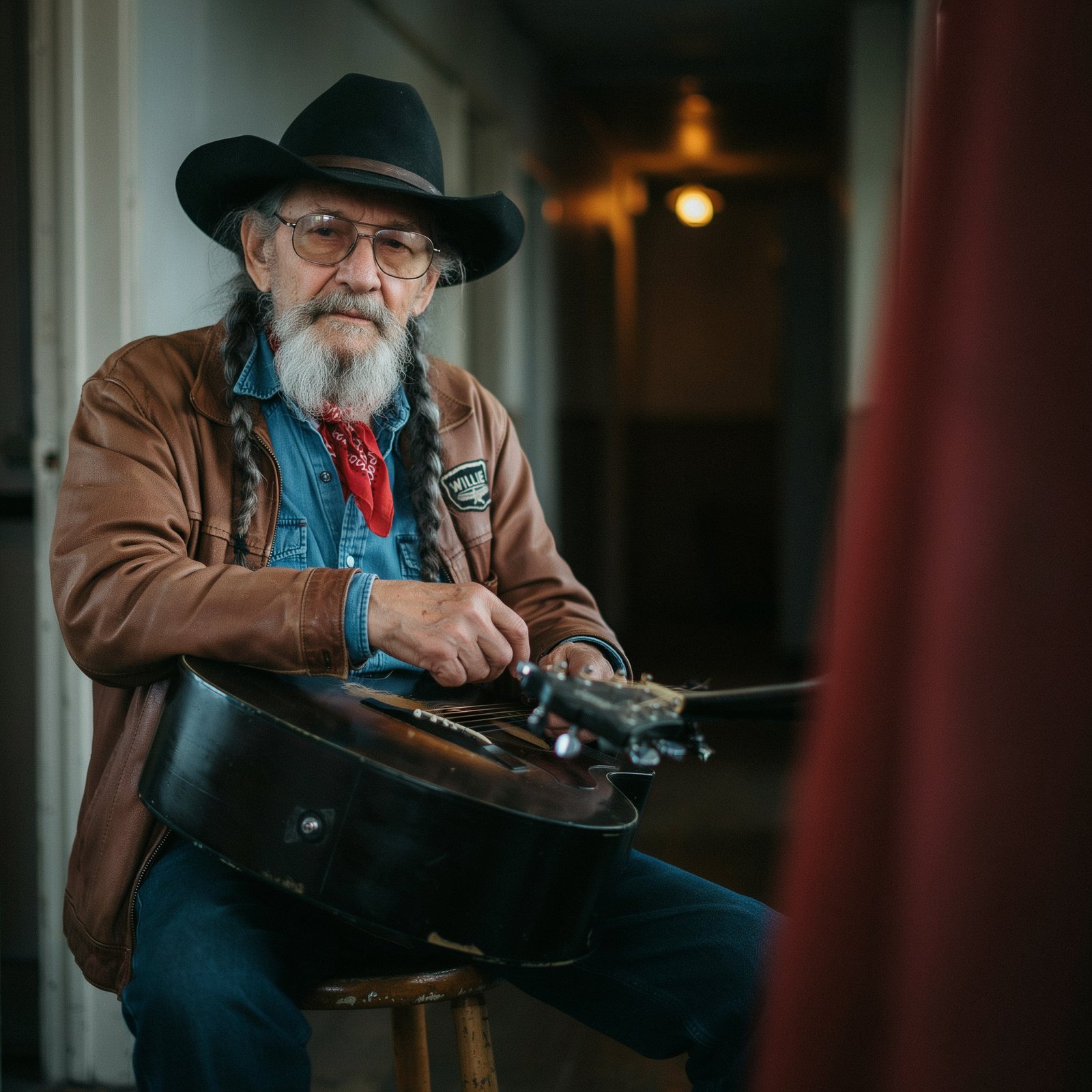
Beyond music, Willie Nelson is a poet, activist, farmer’s champion, and symbol of creative freedom. His weathered face, long red braids, beat-up guitar named Trigger, and unmistakable voice are recognized worldwide — even by people who don’t consider themselves country fans.
Most importantly, his story is one of extraordinary resilience. He faced rejection, bankruptcy, IRS disasters, and personal tragedy. Yet each time, he came back stronger, more creative, and more beloved. This article tells his full story — his early life, musical genius, outlaw revolution, activism, and enduring legacy as one of the greatest American artists who ever lived.
📊 Quick Fact Table
| Detail | Information |
| Full Name | Willie Hugh Nelson |
| Born | April 29, 1933 |
| Birthplace | Abbott, Texas, USA |
| Genre | Country, Outlaw Country, Jazz, Blues, Folk |
| Instruments | Guitar, Harmonica, Piano |
| Famous Guitar | Trigger (Martin N-20 Classical) |
| Active Years | 1956 – Present |
| Record Labels | Liberty, RCA, Atlantic, Columbia, Island |
| Spouse(s) | 4 marriages |
| Children | 7 children |
| Notable Awards | Grammy Lifetime Achievement, Kennedy Center Honor |
| Known For | Outlaw Country Movement, Farm Aid, Cannabis Advocacy |
1. Early Life: Born to Sing in Abbott, Texas
Willie Hugh Nelson was born on April 29, 1933, in Abbott, Texas. Since his parents separated early, he and his sister Bobbie were raised by their grandparents. His grandfather gave him his first guitar at age six. Additionally, his grandmother taught him music notation — planting seeds that would grow into a lifetime passion.
Growing up poor during the Great Depression was difficult. Nevertheless, Willie found joy and escape through music. By age ten, he performed in local bands. By thirteen, he played lead guitar in a polka band. Clearly, music was never just a hobby for Willie — it was his identity and destiny.
After briefly attending Baylor University, he left to pursue music full time. He also served a short stint in the U.S. Air Force. Following his discharge, he worked various jobs — teaching music and selling encyclopedias. Throughout all of this, he kept writing songs obsessively. His natural songwriting gift was already extraordinary during these early struggling years.
2. Nashville Years: Writing Hits for Everyone Else
Willie Nelson arrived in Nashville in 1960 with big dreams and almost no money. Initially, Nashville did not know what to do with him. His unique vocal phrasing and unconventional musical ideas confused record executives. Although they admired his songwriting, they found his performing style too different from the polished Nashville sound of that era.
Despite this resistance, his songwriting talent proved impossible to ignore. During the early 1960s, Nelson wrote some of the most iconic songs in country music history. Patsy Cline recorded his Crazy in 1961, and it became one of the best-selling jukebox singles of all time. Similarly, Faron Young took Nelson’s Hello Walls to number one that same year. Shortly afterward, Billy Walker recorded Funny How Time Slips Away with equal success.
These three songs alone would have secured Nelson a permanent place in country music history. Remarkably, he wrote them all within the same extraordinary creative period. Due to financial desperation, he sold Crazy to Patsy Cline for just fifty dollars because he urgently needed rent money. Despite this sacrifice, the song made him famous as a songwriter across all of Nashville.
Throughout the 1960s, however, Nelson struggled as a performer. RCA Records signed him but pushed him toward the heavily orchestrated Nashville Sound. As a result, the recordings felt inauthentic and albums sold poorly. Consequently, Nelson grew increasingly frustrated with the creative restrictions that Nashville imposed upon him.
3. The Move to Austin: Birth of Outlaw Country
The defining turning point arrived in 1972 when Willie Nelson left Nashville and moved to Austin, Texas. This single decision changed American music history forever. Austin had a vibrant, rebellious music scene where young hippies and old cowboys mixed freely at venues like the Armadillo World Headquarters. Not surprisingly, Nelson fit perfectly into this unconventional, open-minded environment.
In Austin, he finally recorded music entirely on his own terms. His 1973 album Shotgun Willie marked a dramatic artistic breakthrough. Instead of Nashville orchestration, he recorded raw, honest, guitar-driven country music. Critics immediately recognized that something genuinely special had happened.
Moreover, his 1975 album Red Headed Stranger proved to be a complete game-changer. Columbia Records initially resisted its sparse, stripped-down sound and thought it sounded unfinished. Nevertheless, Nelson insisted on releasing it exactly as recorded. The gamble paid off magnificently — Red Headed Stranger became a massive commercial and critical success. Above all, it proved that authentic, uncompromising music could absolutely reach mainstream audiences.
Together with Waylon Jennings, Kris Kristofferson, and others, Nelson then led what became known as the Outlaw Country movement. These artists collectively rejected Nashville’s corporate control. They wrote personal, unconventional songs and kept their rough edges intact. As a result, they created a new chapter in American music that has influenced countless artists across every genre ever since.
4. Trigger: The Guitar With a Soul
No discussion of Willie Nelson is complete without mentioning Trigger — his beloved Martin N-20 classical guitar. Nelson bought Trigger in 1969 after a drunk man stepped on and destroyed his previous instrument. Since then, he has played Trigger at virtually every performance across more than fifty years.
Trigger now has a large hole worn through its body from decades of Nelson’s distinctive picking style. Rather than repairing this hole, Nelson kept right on playing. The guitar’s worn, damaged appearance perfectly mirrors its owner’s weathered authenticity. Furthermore, Trigger has appeared on hundreds of recordings and thousands of live performances throughout Nelson’s extraordinary career.
Nelson has stated publicly that he would retire from performing if Trigger ever became unplayable. Beyond being an instrument, Trigger represents Nelson’s entire artistic philosophy — valuing authenticity, history, and emotional truth above surface perfection. In many ways, that battered, beautiful guitar tells his whole story without a single word.
5. Stardust: Crossing Every Musical Boundary
In 1978, Willie Nelson released Stardust — a collection of classic American pop standards that surprised everyone. Columbia Records was deeply skeptical because country music fans did not typically buy albums of old Tin Pan Alley songs. Nevertheless, Nelson followed his instincts completely and refused to compromise.
Stardust ultimately became one of the best-selling country albums in history. Remarkably, it stayed on the country charts for an astonishing ten years. The album featured timeless songs like Georgia on My Mind, Blue Skies, and All of Me. Through his jazz-influenced phrasing, Nelson brought each classic song completely and uniquely to life.
Most significantly, Stardust demonstrated something essential about Nelson’s genius. He never treated genre boundaries as real limitations. Instead, he simply played music he loved with total commitment. Consequently, audiences from completely different musical backgrounds responded to his artistry with equal and genuine enthusiasm.
6. Farm Aid: Fighting for America’s Farmers
Willie Nelson’s activism is as significant as his music. In 1985, he co-organized Farm Aid alongside John Mellencamp and Neil Young. The concert raised both money and awareness for American family farmers facing severe economic devastation. Corporate agriculture and falling crop prices were destroying farming communities across the entire country at that time.
Over the years, Farm Aid grew into a powerful annual advocacy organization. Since its founding, it has raised more than sixty million dollars for family farmers. Nelson has performed at every single Farm Aid concert, demonstrating a consistency of commitment that is truly remarkable. His dedication to this cause has never once wavered across nearly four decades.
Since Nelson grew up poor in rural Texas, he understood firsthand what farming communities meant to American life. Therefore, his commitment to Farm Aid has always come from genuine personal experience and deep moral conviction — rather than celebrity charity or public relations strategy.
7. The IRS Disaster and Remarkable Comeback
In 1990, the IRS seized virtually all of Willie Nelson’s assets, claiming he owed approximately 32 million dollars in back taxes. His accountants had made catastrophic investment decisions without his full knowledge. As a result, Nelson lost his recording studio, his properties, and most of his possessions almost overnight.
Rather than surrendering, Nelson responded with characteristic creativity. He recorded a double album called The IRS Tapes: Who’ll Buy My Memories? and sold it directly to fans through a 1-800 phone number. All proceeds went toward paying his enormous tax debt. The idea was brilliant in its simplicity and completely consistent with Nelson’s outlaw spirit.
Fortunately, the project succeeded beyond expectations. Combined with negotiated settlements, Nelson paid off his debt within a few years. Throughout the entire ordeal, his loyal fanbase supported him completely and enthusiastically. The experience powerfully demonstrated both his remarkable resilience and the extraordinary depth of connection he had built with audiences over many decades.
8. Cannabis Advocacy: Living Honestly Over Living Carefully
Willie Nelson has been openly honest about his cannabis use for many decades. At a time when such honesty carried serious professional risk, he never attempted to hide this aspect of his life. He famously smoked marijuana on the roof of the White House during the Carter administration — a story he has told with obvious amusement ever since.
In 2015, Nelson launched his own cannabis brand called Willie’s Reserve. The brand reflects his belief that cannabis should be grown and sold responsibly, with fair treatment guaranteed for small farmers. Additionally, Nelson views cannabis legalization as a social justice issue as much as a matter of personal freedom.
Interestingly, his honesty on this topic never seriously damaged his career. Instead, it actually deepened his authenticity and strengthened his connection with fans across multiple generations. Throughout his life, Nelson has consistently believed that living honestly matters far more than carefully managing public perception.
9. Musical Legacy and Historic Collaborations
Willie Nelson’s musical legacy is almost impossible to fully measure. He has released more than 70 studio albums spanning seven decades. Along the way, he has collaborated with artists as diverse as Waylon Jennings, Snoop Dogg, Julio Iglesias, Sheryl Crow, Johnny Cash, and Lady Gaga.
His collaborations with Waylon Jennings produced some of outlaw country’s most defining recordings. Their 1978 album Waylon & Willie went platinum, and their duet Mammas Don’t Let Your Babies Grow Up to Be Cowboys won a Grammy Award for Best Country Performance by a Duo or Group. Similarly, his unexpected 1984 duet with Julio Iglesias on To All the Girls I’ve Loved Before became an international pop hit, introducing Nelson to entirely new global audiences.
This remarkable ability to connect across cultural and musical boundaries is, ultimately, one of his most extraordinary and defining qualities as an artist.
10. Still Going Strong: An Unstoppable Living Legend
Willie Nelson continues to tour and record actively well into his nineties. His annual Fourth of July Picnic concert in Texas draws tens of thousands of devoted fans every single year. Beyond that, he still performs over 100 shows annually — a schedule that would exhaust musicians half his age.
In recent years, Nelson released critically acclaimed albums including Last Man Standing (2018) and First Rose of Spring (2020). Both received strong reviews and demonstrated that his songwriting gift remains completely and beautifully intact. Moreover, younger artists across all genres continue citing Nelson as a primary influence on their own music and artistic philosophy.
If you enjoyed reading this, discover more celebrity insights: Mike Wolfe Passion Project: Biography, Vision
FAQs
Q1. What is Willie Nelson’s most famous song?
Willie Nelson has many iconic songs, but On the Road Again (1980) is arguably his most universally recognized. He wrote it on an airplane napkin for the film Honeysuckle Rose. It won the Grammy Award for Best Country Song in 1981 and became his enduring signature anthem.
Q2. Why is Willie Nelson called an “Outlaw Country” artist?
Willie Nelson earned the outlaw country label because he rejected Nashville’s strict musical conventions in the early 1970s. He relocated to Austin, Texas, recorded music entirely on his own terms, and helped create a raw, authentic alternative to the heavily polished Nashville Sound of that era.
Q3. What happened when the IRS seized Willie Nelson’s assets?
In 1990, the IRS claimed Willie Nelson owed approximately 32 million dollars in back taxes and seized his properties. Nelson responded creatively by recording The IRS Tapes album and selling it directly to fans via a phone number. Through this innovative approach plus negotiated settlements, he paid off the debt within a few years.
Q4. What is Willie Nelson’s guitar called and why is it famous?
Willie Nelson’s guitar is named Trigger — a 1969 Martin N-20 classical guitar with a large hole worn through its body from decades of playing. Nelson has used Trigger at virtually every performance for over fifty years. It powerfully represents his lifelong commitment to authenticity over surface perfection.
Q5. What is Farm Aid and what is Willie Nelson’s role in it?
Farm Aid is an annual benefit concert and advocacy organization that Willie Nelson co-founded in 1985 with John Mellencamp and Neil Young. It supports American family farmers facing economic hardship. Since its founding, Farm Aid has raised over sixty million dollars. Nelson has performed at every single Farm Aid concert without exception.
Conclusion
Willie Nelson’s story is ultimately about artistic freedom and uncompromising personal authenticity. He refused Nashville’s restrictions and built his own musical world entirely from scratch. He survived bankruptcy, IRS seizure, and deep personal hardships. Yet he emerged from every single challenge with his creativity and spirit completely, remarkably intact.
Beyond music, his legacy extends into social activism, agricultural advocacy, and honest public living. He championed American farmers when they desperately needed a powerful voice. He spoke honestly about cannabis decades before mainstream acceptance finally arrived. Additionally, he collaborated freely across every musical boundary imaginable throughout his career.
Great artists create great music. Legendary artists, however, create movements, inspire generations, and permanently change the culture around them. Willie Nelson accomplished all of this — armed with nothing more than a battered guitar, a red bandana, long braids, and a voice that sounds like the American soul itself.
He is not merely a country music legend. Without question, he is a national treasure.