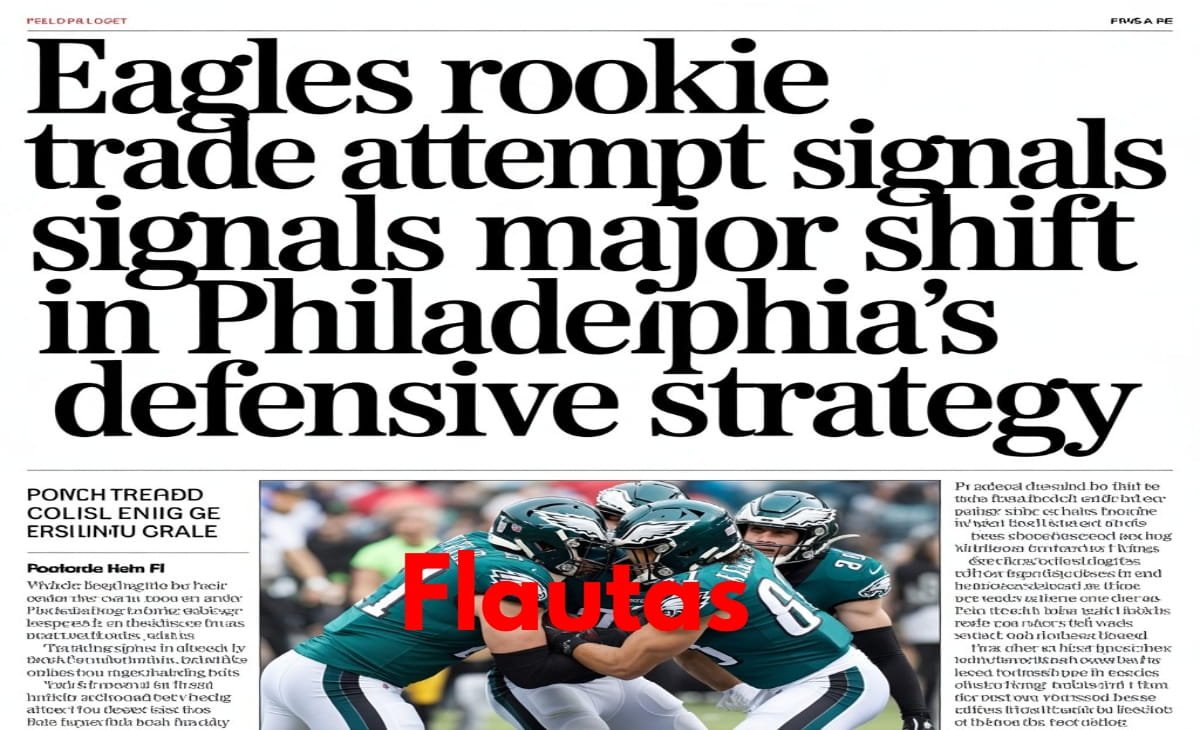
Eagles Rookie Trade Attempt Signals Major Shift in Philadelphia’s Defensive Strategy
The eagles rookie trade attempt has become one of the most important offseason developments for Philadelphia, reflecting deeper changes in roster construction, defensive identity, and long-term planning. Rather than relying solely on free agency or traditional draft selections, the organization explored acquiring a young defensive contributor through a strategic trade.
This move is not just about adding talent—it’s about preparing for veteran departures, improving defensive speed, and maintaining competitiveness in a rapidly evolving NFL landscape. Understanding this decision provides insight into how Philadelphia is balancing immediate performance with sustained success over the next several seasons.
Table of Contents
- Introduction
- What the Eagles Rookie Trade Attempt Really Means
- Strategic Breakdown: Why Philadelphia Targeted a Rookie
- How This Move Fits the Eagles’ Long-Term Defensive Plan
- Real Benefits and Practical Impact on the Roster
- Common Misconceptions About Rookie Trades
- Comparison: Rookie Trades vs Free Agency vs Draft-Only Approach
- Expert Insights Competitors Missed
- FAQs
- Conclusion
What the Eagles Rookie Trade Attempt Really Means
At its core, the eagles rookie trade attempt represents a proactive approach to roster evolution. Instead of waiting for talent to develop naturally through draft selections alone, the team explored accelerating defensive improvement by acquiring a rookie already evaluated as a strong scheme fit.
Philadelphia’s defense faces a transitional period. Veteran leaders who have anchored the defensive front for years are nearing retirement or free agency, and the team must ensure continuity. Young defensive players offer speed, adaptability, and long-term value at a lower salary cap cost compared to established veterans.
This type of move reflects confidence in the team’s scouting department. It also signals urgency, as the organization aims to remain competitive while rebuilding critical defensive positions.
Strategic Breakdown: Why Philadelphia Targeted a Rookie
Philadelphia’s interest in acquiring a young defensive player stems from several interconnected roster challenges. The defensive unit must maintain performance despite aging veterans and evolving offensive threats across the league.
The Eagles’ defensive philosophy emphasizes speed, flexibility, and pass-rush depth. Modern NFL offenses rely heavily on mobile quarterbacks and quick passing schemes, making younger, faster defenders essential. Acquiring a rookie through trade allows the team to secure a player already evaluated as capable of contributing within their system.
Additionally, salary cap efficiency plays a major role. Rookie contracts are significantly more affordable, allowing teams to allocate financial resources toward retaining star players at premium positions like quarterback and wide receiver.
This strategic balance between cost efficiency and performance is a hallmark of successful long-term NFL franchises.
How This Move Fits the Eagles’ Long-Term Defensive Plan
Philadelphia’s defensive identity has historically relied on dominant line play and disciplined linebackers. However, maintaining this identity requires continuous talent renewal. The eagles rookie trade attempt aligns with a broader strategy to gradually transition from veteran-dependent performance to youth-driven sustainability.
Veteran defensive leaders have provided leadership and consistency, but physical decline and contract limitations make succession planning essential. Younger players can develop within the system while contributing rotational value early in their careers.
The coaching staff also benefits from having adaptable defenders capable of executing complex defensive schemes. Rookie defenders often bring versatility, allowing coaches to experiment with formations and matchups.
This move represents a bridge between the current defensive core and the next generation of defensive leadership, ensuring the team remains competitive at the highest level.
Real Benefits and Practical Impact on the Roster
The decision to pursue a rookie defender provides both immediate and long-term advantages. These benefits extend beyond individual performance and affect overall roster flexibility and competitiveness.
Key roster benefits include:
- Improved defensive depth and injury protection
- Faster, more adaptable defensive personnel
- Reduced salary cap pressure through rookie contracts
- Increased competition during training camp
- Long-term succession planning for veteran replacements
These factors strengthen the defensive unit while protecting the team from performance declines caused by injuries or aging players.
Common Misconceptions About Rookie Trades
Many fans assume acquiring a rookie automatically produces immediate results, but development timelines vary significantly. Rookie defenders must adapt to faster game speed, complex playbooks, and higher physical demands.
Another common misconception is that such trades indicate dissatisfaction with current players. In reality, these moves are usually proactive rather than reactive. Teams seek to build depth and prepare for future roster transitions rather than replace productive veterans immediately.
Some observers also underestimate the financial component. Rookie contracts provide tremendous value, allowing teams to maintain competitive rosters while managing salary cap limitations.
Understanding these factors helps explain why teams pursue rookie acquisitions even when their current roster appears strong.
Comparison: Rookie Trades vs Free Agency vs Draft-Only Approach
Each roster-building method offers distinct advantages and risks. Philadelphia’s decision to explore a rookie acquisition reflects careful consideration of these options.
Rookie Trade Advantages
- Immediate access to evaluated talent
- Faster integration into team system
- Controlled contract cost
- Reduced uncertainty compared to unknown draft prospects
Free Agency and Draft Differences
Free agency offers proven players but often involves higher financial risk and shorter long-term value. The draft provides long-term upside but includes uncertainty about player development.
The Eagles rookie trade attempt combines elements of both strategies by acquiring a young player already assessed as capable of fitting the team’s needs.
Expert Insights Competitors Missed
One of the most important aspects of this move is its connection to defensive succession planning. Veteran defensive leaders have provided elite production, but maintaining defensive performance requires gradual replacement with younger talent. This transition cannot happen suddenly without risking performance decline.
Another overlooked factor is defensive scheme evolution. Modern NFL defenses require hybrid players capable of multiple roles. Acquiring a rookie allows coaching staff to develop versatile defenders tailored to their specific system.
Salary cap forecasting also plays a crucial role. Teams must plan several seasons ahead, ensuring they can retain core offensive stars while maintaining defensive strength. Rookie contracts provide cost-controlled production, enabling better financial planning.
Additionally, competition within the roster improves overall performance. Young players push veterans to maintain peak performance, creating a stronger and more resilient defensive unit.
This strategic depth ensures that the team remains competitive both immediately and in the future.
FAQs
Why did Philadelphia pursue this rookie trade?
The move helps strengthen defensive depth, improve long-term roster stability, and prepare for eventual veteran departures.
Will the rookie start immediately?
Most rookie defenders begin in rotational roles before earning starting opportunities based on performance and development.
Does this indicate defensive rebuilding?
Not necessarily rebuilding, but rather proactive reinforcement to maintain defensive competitiveness.
How does this impact veteran players?
Veterans maintain leadership roles while mentoring younger players and competing for playing time.
Is this move financially beneficial?
Yes. Rookie contracts offer high value and help teams manage salary cap resources efficiently.
Could this improve playoff chances?
Improved defensive depth and flexibility increase overall team resilience during the season.
Why not rely only on draft picks?
Trades allow teams to acquire specific players already identified as strong system fits rather than relying on draft availability.
Conclusion
The eagles rookie trade attempt represents a strategic investment in the future of Philadelphia’s defense. By acquiring young, cost-effective talent, the organization strengthens roster depth, prepares for defensive transitions, and maintains long-term competitiveness.
This move reflects a calculated approach to roster building—balancing immediate performance needs with sustainable success. As the season approaches, the development of young defensive players will play a crucial role in shaping the team’s defensive identity and overall championship potential.
Philadelphia’s willingness to act early and strategically demonstrates its commitment to remaining one of the NFL’s most competitive franchises.